
Emergency Roof Leak? Here’s What to Do in the First 24 Hours
A roof leak seldom presents itself at a convenient moment; it typically occurs in the middle of a storm, late at night, or immediately after you’ve just finished renovating the ceiling. No matter where you are in Charlotte, Matthews, Pineville, Huntersville, Cornelius, Concord, Fort Mill, or Indian Trail, the actions you take in the first 24 hours can make all the difference between a simple repair and a much larger, costlier problem.
Contain the water, don’t chase the leak onto a wet roof yourself, cut power near anything electrical, and call a local licensed roofer as soon as it’s safe. Document everything along the way — it’ll matter for your insurance claim. The full step-by-step guide below walks through each part in order.
Get the water under control immediately
What you should focus on isn’t the roof but keeping the inside of your house safe. Water damage spreads quickly, and every minute counts.
- Put a bucket, trash can, or large bowl beneath the drip to collect water and protect your flooring.
- If the ceiling is bulging or sagging in one spot, water is probably collecting above the drywall. Carefully poke a small hole in the center of the bulge with a screwdriver so it drains in a controlled way into your bucket, instead of letting the ceiling collapse on its own.
- Move furniture, electronics, and valuables out of the affected area.
- Lay down towels or a tarp to soak up any water that’s spreading.
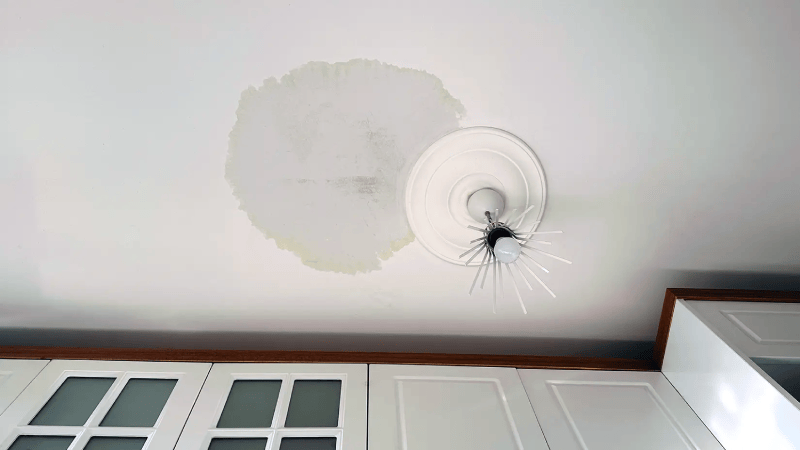
A bucket under the drip won’t fix the leak, but it buys you time to think clearly about next steps.
Identify the source — don’t chase it
It’s tempting to climb onto the roof right away to find the leak, but this is one of the biggest mistakes homeowners make. Roofs are especially hazardous when wet, and the point where water enters is often several feet from where it actually drips down inside — water travels along rafters and sheathing before it shows up.
- If it’s safe to do so, check your attic with a flashlight for wet insulation, water stains, or dripping.
- Note the general area of the house where the leak is happening so you can describe it to a roofing professional.
- Take photos as you go. This documentation is useful for insurance claims and helps a roofer understand what they’re walking into before they arrive.
Cut power to any affected electrical areas
Water and electricity are a dangerous combination. If the leak is anywhere near light fixtures, outlets, or wiring, switch off power to that section at your breaker box. If you’re unsure whether it’s safe, it’s better to shut off power to the whole house temporarily than risk an electrical fire or shock.
Address the roof from the outside — carefully
If the leak is severe and it’s safe during a break in the weather, a temporary exterior fix can slow things down until a professional arrives:
- A tarp secured over the affected area with roofing nails or boards can block additional water from getting in.
- Don’t get on a roof that’s wet or steep. If you can’t safely reach the area from a ladder on stable, dry ground, skip this step and wait for a professional.
Your safety matters more than a few extra hours of water getting in. A roofing crew has the harnesses, footwear, and experience to do this safely — you likely don’t.
Call a local roofing professional
This is the step that actually solves the problem. A licensed, local roofer can determine where the leak truly comes from — not just where the water shows up inside — put in place a proper temporary or emergency repair, and give you an honest read on whether this is an isolated issue or a sign of broader roof wear, from aging shingles to flashing failures to storm damage.
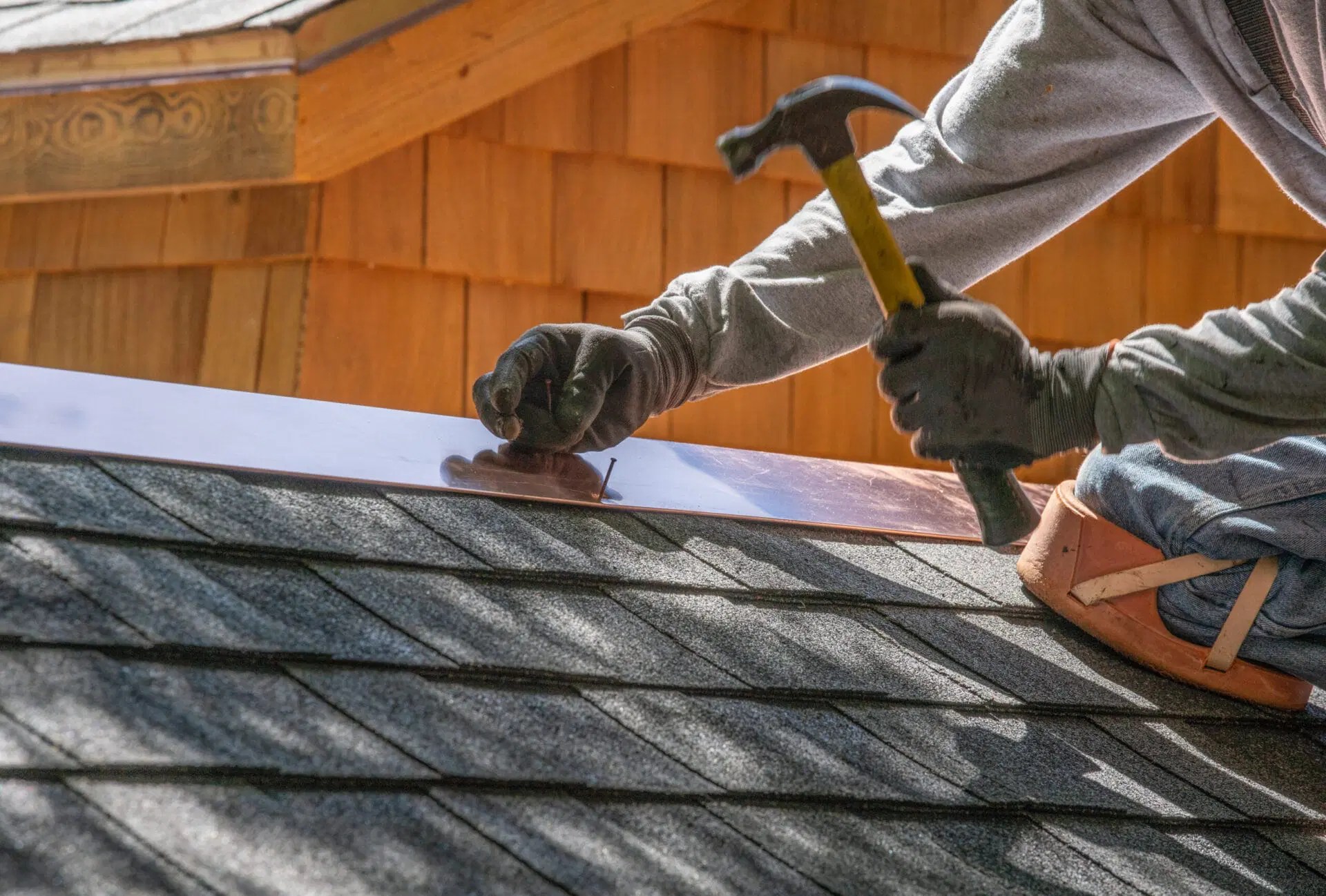
A proper repair starts with someone actually up there, not a guess from the driveway.
Five24 Roofing serves homeowners throughout the Charlotte metro area, including Matthews, Pineville, Huntersville, Cornelius, Concord, Fort Mill, and Indian Trail. We’re licensed in both North Carolina (#104466) and South Carolina (#67298), and we’re certified installers with GAF and CertainTeed — trained to the standards those manufacturers require, and standing behind our work.
When you call, be ready to share:
- Roughly where inside the home the leak is happening.
- How long it’s been leaking and whether it’s gotten worse.
- Any photos you’ve taken of the damage.
- Whether this is a new issue or one that’s happened before in the same spot.
That information helps us prioritize emergency calls and arrive with the right supplies ready.
Document everything for your insurance company
Most homeowner’s insurance policies cover sudden roof leaks, especially those caused by storm damage, fallen limbs, or wind-lifted shingles. To make a claim smoother:
- Photograph the interior damage, the source area if visible, and any exterior damage like missing shingles or debris.
- Keep a written timeline: when you noticed the leak, when you called a roofer, and what temporary measures you took.
- Save receipts for any emergency supplies, like tarps or buckets — these are sometimes reimbursable.
- Get a written estimate or inspection report from your roofing contractor; this documentation is often required for a claim to move forward.
Plan for the permanent fix
Once the immediate emergency is under control, don’t let the roof slip back onto the “someday” list. A leak almost always signals an underlying issue — cracked flashing, worn shingles, a damaged vent boot, or granule loss from age. Left unaddressed, even a small leak can lead to mold, rotted decking, and far costlier repairs down the road.
A full roof inspection after any leak is the best way to know whether you’re looking at a targeted repair or whether it’s time to start planning for a replacement.
The bottom line
The first 24 hours after discovering a roof leak are about containment, safety, and getting the right professional involved — not trying to solve everything yourself. Protect your home’s interior, avoid unnecessary risks on a wet roof, and get a local, licensed roofer on the phone as soon as possible.
Dealing with an active roof leak anywhere in the Charlotte metro area? We can help right now.